Impact of COVID-19 on College Athletics (FINAL)

            The Coronavirus pandemic has impacted many different people in many different ways. However, college athletics continued on this year regardless of how fast Coronavirus was spreading. Even though sports were being played, COVID-19 had many impacts on each sport in different ways.

            When the Coronavirus hit the US hard in early March last year, everyone was concerned, and life as we knew it came to a screeching halt. Even the notorious “March Madness” NCAA basketball tournament was cancelled.

            “Today, NCAA president Mark Emmert and the board of governors canceled the Division I men’s and women’s 2020 basketball tournaments, as well as all remaining winter and spring NCAA championships,” said the NCAA.

            Things were very confusing in the beginning of the pandemic, but as time went on, we adopted procedures to keep ourselves and others safe such as wearing masks, standing 6 feet apart, and washing our hands frequently

      When August came around, college sports such as football and soccer. The Coronavirus was still spreading rapidly, and there was debate between the larger conferences of whether or not football should be played.

            “I would say we cannot cancel the season right now,” said Ohio State head football coach Ryan Day. “We have to at the very least postpone it and allow us a little b it of time to keep reevaluating everything that’s going on.”

            Although the virus is dangerous, players were eager to play. Clemson Universities starting quarterback Trevor Lawrence even tweeted about his willingness to play amid the COVID-19 outbreak.

            “People are at just as much, if not more risk, if we don’t play. Players will all be sent home to their own communities where social distancing is highly unlikely and medical care and expenses will be placed on the families if they were to contract COVID-19,” said Lawrence

While seasons were played out, many athletes, coaches and other staff at one point or another contracted the virus. According to a New York Times analysis, over 6,600 people in the NCAA have had the coronavirus.

“At least 6,629 people who play and work in athletic departments that compete in college football’s premier leagues have contracted the virus,” said the New York Times. “The actual tally of cases is assuredly far larger than what is shown.

The New York Times also revealed that the NCAA was not counting cases or requiring universities to report cases to them.

COVID-19 had spread inside of many universities and teams, and it has had lasting effects on some players. In December, Florida Forward Keyonte Johnson collapsed on the floor during a time out. 

“When I woke up, I thought I was dreaming when I saw my mom in front of me,” said Johnson. “I was still really drowsy, but I could kind of open my eyes.”

Johnson and multiple other Florida University teammates tested positive for COVID-19 earlier in the year, but it was later determined that Johnsons collapse was not due to previously having COVID-19. However, research has been done that shows COVID-19 can cause heart problems after contracting the virus.

Besides teams being affected by the coronavirus, fans have also been affected by the outbreak of the virus.

“Fans are important because they provide revenue,” said Peach Bowl chief executive Gary Stokan. “We are still unsure if it makes sense to host games without fans filling out the stadium.”

COVID-19 has had its effects all around the world. Our world shut down when it arrived, but since then, we have found ways to stay safe and live out our lives as normally as possible, while adapting to the changes caused by the virus.

  • CNN is a quality and trustworthy source, that have had many reporters cover college athletics during the COVID-19 outbreak. This article covers the concerns of large athletic conferences during the beginning of the pandemic.
  • USA Today‘s sports section has spent lots of time the past year covering college athletics. In this article, Gregg Doyle argues that the NCAA cares more about revenue than the players and staffs safety.
  • In this article in CBS Sports, Kyle Boone covers why the 2020 March Madness basketball tournament was canceled.
  • This New York Times article covers how many cases have appeared in the NCAA.
  • This NBC News article covers Keyonte Johnsons story and future recovery, and how it is/isn’t related to him getting COVID-19.


Statistics and Number in Articles

So my article is about how COVID-19 has impacted college athletics. Luckily with this topic, there are lots of numbers and statistics out there. So my problem is not where I’ll find my numbers, it is what number and statistics do I want to include in my article, and how can I visually portray these stats.

As far as stats and data that I want, I think the main statistic I want to find and include would be the number/percentage of how many players have gotten COVID-19 during the season, as well as the the percentage of games that have been postponed/cancelled throughout the season. I think these two stats are most important because they convey how COVID-19 has hit a team, and the effect it had on not only players, but the teams schedule as well.

I think the way I would use these stats would be to show a progression over time from last March to this March.As far as a graphic for this information goes, I’m not quite sure what form of visual I can use. However, I believe showing progression over time makes the most sense because as time went on from last March to this March, cases have rapidly gone upward despite the creation of a vaccine.

Week 4 Blog: Project Progress

For my project, I decided that I will write about COVID-19’s impact on college sports, and if college sports should be played with COVID running rampant. As far as progress goes, I have found many sources from CNN reporters to writers for sports magazines who mainly focus on college athletics, and even a small podcast of former NCAA wrestlers who are now college coaches.

I think my angle for the article is going to be how COVID has impacted the season for mainly basketball/football, and what could have been done differently to make the seasons go more smoothly. This is the idea I have right now, but I’m not truly sure which direction I want to take it because I could go so many ways with my topic.

Some video or audio I could include for my project would be postgame interviews with players or coaches of different teams. Duke University basketball coach Mike Krzyzewski has expressed his concerns multiple times during post game interviews. Linked to his name is an example. Along with the video of Coach K, the article itself expresses opinions of how the NCAA and Universities care more about protecting athletes than everyone else. Other than this, I’m not sure how else I could include audio/video in my article.

Article Analysis

In this article by TIME, many college basketball coaches express their opinions and frustrations as well as worries about playing out the 2020-2021 college basketball season with COVID-19 running rampant.

  • Pittsburgh Coach Jeff Capel says these athletes are putting their health on the line for entertainment, and they’re not being compensated.
  • Duke Coach Mike Krzyzewski agrees that playing the 2020-2021 basketball season does not feel right, and believes things should be done instantly.
  • Iowa point guard Jordan Bohannon says that it is unfair that players have to distance themselves from family and loved ones just to play a basketball game on Christmas day and make their universities money.
  • The publisher argues that the NCAA is based upon amateurism, and that it does not make sense that college athletes cannot benefit off of their own name, image, or likeness.
  • While college athletes get educations from prestigious schools, they are often advised to take “easier” majors so that they can focus less on school, and more on practice/sports.
  • Former Xavier forward and NBA champion David West says that Coach Capel is speaking the words that have been true for a long time, that amateurism is a con. And with the pandemic, the NCAA is having a hard time keeping up the facade that money won over rhetoric.
  • Capels words indicate that schools care more about money than their students and athletes safety.

Big Project Topic

For my topic for this semesters big project, I chose to write about COVID-19s impact on college athletics and if college sports should be played with the risk of COVID. I chose this topic over my other two because I feel that more information will be at my fingertips, whereas with the other topics I would have to dig deeper to find what I want. The following sources are people I could use to have information about my topic.

One source I could use is CNN. CNN would make a good source because the multiple reporters working there have been covering the same topic that I will be for months.

A second possible source is Pat Forde. Forde is a senior writer for Sports Illustrated. He makes a good source because he mainly covers college athletics.

Another possible source could be the D3 Nation Podcast. This podcast is ran by two former D3 wrestlers and current wrestling coaches. Their experience both as players and coaches could be critical in getting detail about what they experienced as players when COVID was not a thing, as well as how much has changed in coaching when COVID spread.

One last possible source is Bruce Feldman. Feldman is a reporter and writer for Fox Sports. He is a good source because he has built up credibility over the years, even release a NYT Best Selling book.

The Big Project: 3 Topics

Published By: Garrett Thompson

One topic that instantly comes to mind for me is the impact of COVID-19 on college sports. Should players and coaches really be putting their health at risk to play a game/match? In this article by ESPN, they cover what universities and teams are dropping out of tournaments, big games, as well as each game that is being postponed. This is a good topic because it is newsworthy as well as argumentative, there are people on both sides for the concern of weather or not college sports should be played.

Another good topic that came to my mind is if colleges should be charging full price for students who live on campus, but have all online classes. This article by CNBC, students explain their frustration of how they are paying full price for online classes, when they are practically teaching themselves the material each day. This is a newsworthy article because it is controversial, and like my previous idea, there are people who think the prices are fine as well as people who think universities should be discounting their tuition prices.

One last idea is are students really learning anything through online classes. In this article by the New York Times, they talk about what students opinions are about online classes, what they miss about classes being in person, as well as the differences between the two forms of learning. For me personally, I feel like online classes have done nothing for me. I’m about to finish my sophomore year of college, and I have yet to interact with a TV studio because in each class that I’m supposed to, we can’t because classes are online and I’m not at Bloomsburg. This is probably the most newsworthy topic of my three because students have many feelings about this topic, and I would like to think professors have a lot to say about this topic as well.

Cyber Crime

Cyber crime has been a problem in technology for pretty much as long as a computer has been around. People know as “hackers” sit behind their screen, and can steal information, money, and much more from a single person or in some cases a whole company, and sell it so that it can later on being exposed. When this happens, companies and people reputation can be completely ruined. I think cyber crime is a huge problem for everyone because of the possibility of people having very valuable information stolen and exposed, and because businesses often neglect cybersecurity causing them to become compromised by hackers.

One of my points is that businesses often neglect cybersecurity. When I say neglect, that means they choose not to invest in proper protection of their information. According to The Atlantic, AT&T did a survey and the results showed that only 53% of companies with fewer than 50 employees place a high priority on cybersecurity. While 53% may look like a good number, meaning the majority of companies put a high priority on cybersecurity, this also means that 47% of companies didn’t place priority on cybersecurity. To make matters worse, only 30% of small companies provide training on how to recover from breaches. This means 70% of companies could have all of their information stolen, and have no idea how to recover from it. For those companies who don’t value cybersecurity and don’t train on how to recover, most of the time these businesses fall out. The Atlantic says that a main reason businesses neglect cybersecurity is because they don’t realize that they have been compromised. Most of the time information is stolen and used in a larger scheme that has many targets, or in other cases the information is stolen and put away for a later attack. According to Steemit, the aggregate loss of companies due to cyber crime tallies in the billions each year. Thus, data breaches not only impact the companies, but the customers as well. A good example of an information breach is what happened to Equifax where tens of millions of Americans financial information was exposed. Data storage applications such as cloud are helpful for businesses, but they also make the people that use storage center like that vulnerable. Two common forms of cyber crime are DDoS and Phishing. A Distributed Denial of Service, otherwise know as DDoS, is when the hacker sends a high volume of information through a network until the network becomes overloaded and stops functioning. DDoS attacks are near impossible to stop and they make it difficult to sort real traffic from the fake traffic. Phishing is when something that looks like a trustworthy or official third party requests data such as passwords. Most of the time, these attacks take place in emails, where the user is provided a link to click on and enter their personal data. As long as cybersecurity isn’t a requirement for all businesses, cyber crime will still be the main cause to businesses going out fo business.

My other point is that people have valuable and personal information stolen and exposed. In the last paragraph, I talked about the Equifax breach. All information in this paragraph has been taken from Outpost24. In 2017 Equifax, an American credit card company, announced that it had suffered a cyber attack over the course of a few months. They revealed this information 6 weeks after they were hacked. This cyberattack contained names, birthdays, social security numbers, drivers license numbers and much more of over 143 million American, Canadian and British customers. As well as over 200,000 credit card numbers. Because this company didn’t have proper cybersecurity, hundreds of millions of peoples information were stolen. The fact that this could’ve been avoided with proper security makes it so much worse. According to Selfkey, hacker have multiple options once they have stolen data. Most of the time, hackers will scan your data for important information like bank details, logins, photos, messages, etc. Even more often though, hackers will end up selling your information to a third party, often called a “Broker”. A broker buys your card details on a marketplace and resell them a “carder”. The carder then takes as much money out of all the persons accounts before the person or their bank notices. The fact that hacker can get in, get what they want, and then resell leaving no trace of what they did is scary. However, individuals can protect themselves. According to TheNextWeb, things like making sure you’re on a secure WiFi network, checking for weaknesses in your WiFi, disabling and managing third party permissions, encrypting your data yourself, overwriting deleted files and prating the Principle of Least Privilege can all help you defend yourself against hackers. The PoLP is basically telling you to not take on responsibility when its not necessary to. According to TheNext Web, the moment you advertise yourself online as an administrator, it leaves you vulnerable to attacks as a result of compromised files or hardware. While having no cybersecurity leaves many people at risk, it is quite easy to do most of these things yourself, and lower the risk that your information becomes compromised.

Cybersecurity has been and in my opinion always will be a problem. No matter what technological advances are made, people likes hackers are always going to find the back door. Nothing is ever made perfectly. But with the tools the internet can provide us, installing cybersecurity and taking extra precautions can help prevent cyber crime. I think the main reason cyber crime is so prevalent is because companies ignore the fact that they need security, and that hackers can easily access and steal information as well as money from pretty much anyone.

Media Culture For Musicians

Growing up, I was always into music. My dad grew up listening to rock, and when I was born the same happened with me. Ozzy Osbourne, Metallica, Iron Maiden, Megadeath. These were all groups who’s music I have listened to for a long time because of my dad. I’m not really that into hip hop music. Besides a couple Kendrick Lamar songs, I don’t really pay attention to the genre of rap/hip hop too much. After researching, I have come to the conclusion that rap and hip hop music is all about personal expression, and describing the struggles that one has went through in their lifetime, and how they have gotten past those struggles. In the following body paragraphs, I will be answering questions such as “How does this culture use media?” “What role does media play in this groups lives?” “What needs do media satisfy for this culture?”

Rap and Hip Hop cultures essentially use media in very similar ways. Media is not only used to show their music to the world, but also to promote themselves as artists. In lecture 12.1, it describes media culture as cultures using media to make sense of the world. I believe this statement is true for the hip hop and rap culture because if you’re in this business, you need to be on media to release, preview, and promote music. There are many more uses for media for the rap/hip hop culture, but the main ways they use them is the ways I listed above.

Media plays a huge role in this cultures life. If it wasn’t for the many types of media we have, these artists wouldn’t have outlets to share all of their music so easily on. If it weren’t for these medias, everyone would have to put their music on CDs, or cassette/vinyl tapes. Because of how easy it is for artists to release their music to the world on a variety of platforms, it make it easier for people to come to know that certain artist. In the article linked here, the author states that although media can have both positive and negative impacts on many things, media mainly helps the hip hop and rap culture, as it helps them spread their music, and gain a following. I agree with what the author has stated because the only reason I know of some rap and hip hop artists is because of how big they are in the media.

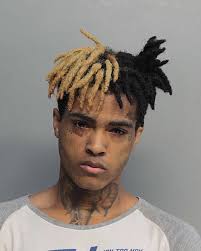
I believe the two needs that media satisfy for this culture are recognition and social. Rap and Hip Hop can be portrayed in the media both negatively and positively. In lecture 2.2, the slide says some groups are portrayed favorably, and other are portrayed in derogatory ways. Rap is presented in a positive way by artists promoting their music, and gaining comments and followers saying how much the fans are enjoying the music. However, rap and hip hop are also presented in negative ways. undefined Pictured above is rapper XXXTentacion, who’s real name is Jahseh Onfroy. This is his mug shot from 2014, when he was charged with gun possession. Its pictures like this and news that spreads about this that put a negative image on the hip hop and rap culture. Onfroy was released. In June of 2018, he was killed leaving a motor sports store in Florida. He was 20 years old. His death was not only bad for all his fans and family, but furthermore but a bad image on the hip hop and rap culture. This is because the things he did during. his professional career got him killed, and that this could happen to any artist. Although XXXTentacion had a plethora of legal troubles, his past did not dwell on him, as even before his passing his music was being listened to over and over again by people all over the world.
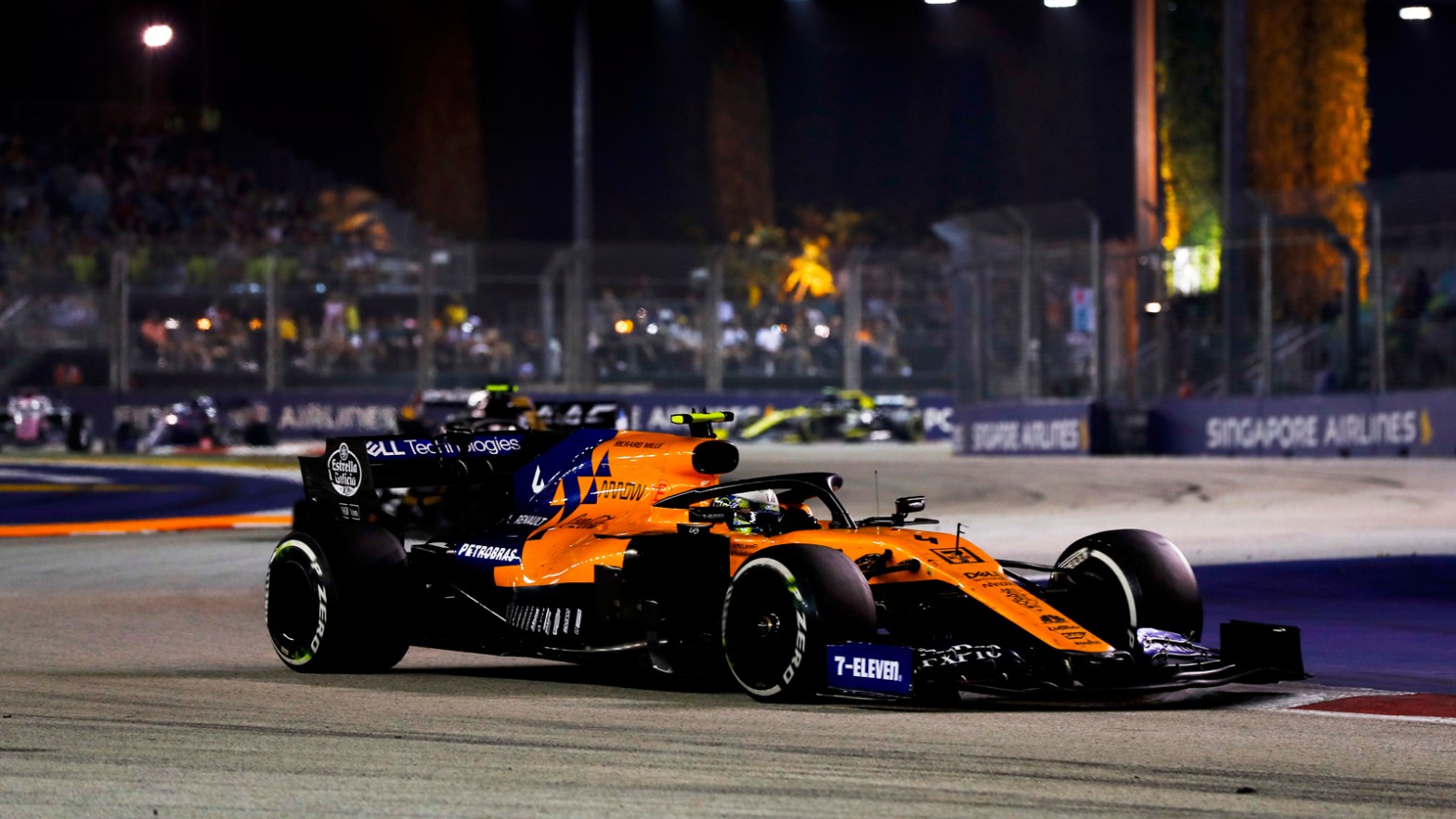
I also think that media satisfies social needs for the rap and hip hop culture. As lecture 12.3 says, media enables us to socialize in myriad ways. While goes hand in hand with the hip hop and rap culture. this culture utilizes socialization through media, about media and around media. This culture revolves around media. If a well-know artist drops a new album, they promote it on instagram or twitter, which then gets people talking about it. The artists themselves talk about other artists and their opinions on them, and fans socialize about the artists.

To bring all my thoughts together, media has a variety of impacts on different cultures and groups and while some of those impacts may be negative, the positives outweigh the negatives because of how much media improves growth in the hip hop and rap culture.

Formula One: Drive To Survive

During this weeks lectures, Dr. Dennis talked about reality, and how media tries to convey it through tv shows, movies, and many other forms, but some fail to do so. One example of a TV show or movie that I believe shows reality quite well is the Netflix exclusive show, Drive To Survive. I have linked the trailer to season 2, which comes out tomorrow (Friday, February 28). In this show, it gives people a behind the scenes look at what it’s like to be a part of a Formula One racing team, as well as getting to know the drivers more personally than just the people in the cars.

Some might say that because this show is a documentary, some things may be scripted for TV. But for this documentary, that is far from true. This show follows all 10 teams throughout the whole season, from February to November, traveling all across the world as each race is in a different country every week. In this article by Bleacher Report, they go through how hard it really is to drive an F1 car.

But back to the question at hand. How does this media show reality? How truthful is this media? What is left out, unexplained, or misrepresented?

This media shows reality by following all the F1 teams throughout the whole season. In lecture 6.1, Who’s Reality?, a slide about factuality pops up. This show would fit under this category because it documents the Formula One season from a behind the scenes perspective. Most people just see the brightly colored cars, the loud noises, and who wins the races. What most people DONT see is the stuff this TV show provides. I would’ve never known that Daniel Ricciardo started kart racing at age 9. This YouTube video shows Daniel Ricciardo talking about how the show Drive To Survive on the map in the US.

I think this media is incredibly truthful. You get behind the scenes with the drivers, the pit crew, even the lead engineers for the teams. The only team housed in the US since 1986, and Team Principal undefinedGuenther Steiner (pictured above) has become an iconic figure in the F1 scene since the release of Drive To Survive season 1. In this video, it mainly shows the Haas pit team, and their success in the qualifying, but ultimately the Haas driver both do not finish the race.

I don’t believe that the series leaves anything unanswered, as the go from the start of the season to the end, which also means nothing is left out as they go into detail and cover most if not all teams and drivers. The only thing I think is misrepresented is the fact of how difficult it is to become a Formula One driver, and stay in Formula One. One season you could be the lead driver for a bad team, but next year comes around and if you aren’t performing well, the team has all the right to get rid of a driver at any point if they are underperforming. With that being said, another thing they leave out is how cutthroat the sport is. Nobody cares how good you were last season, if you aren’t doing well now then it doesn’t matter, same goes for the pit members, engineers, even the leaders on F1 teams.

To bring it all together, I think that the Netflix exclusive series Drive To Survive is a form of media that depicts reality to the most exact detail. They don’t leave much out and are pretty truthful and trustworthy because of how in depth they go, and the perspective the show is help from.

Design a site like this with WordPress.com
Get started